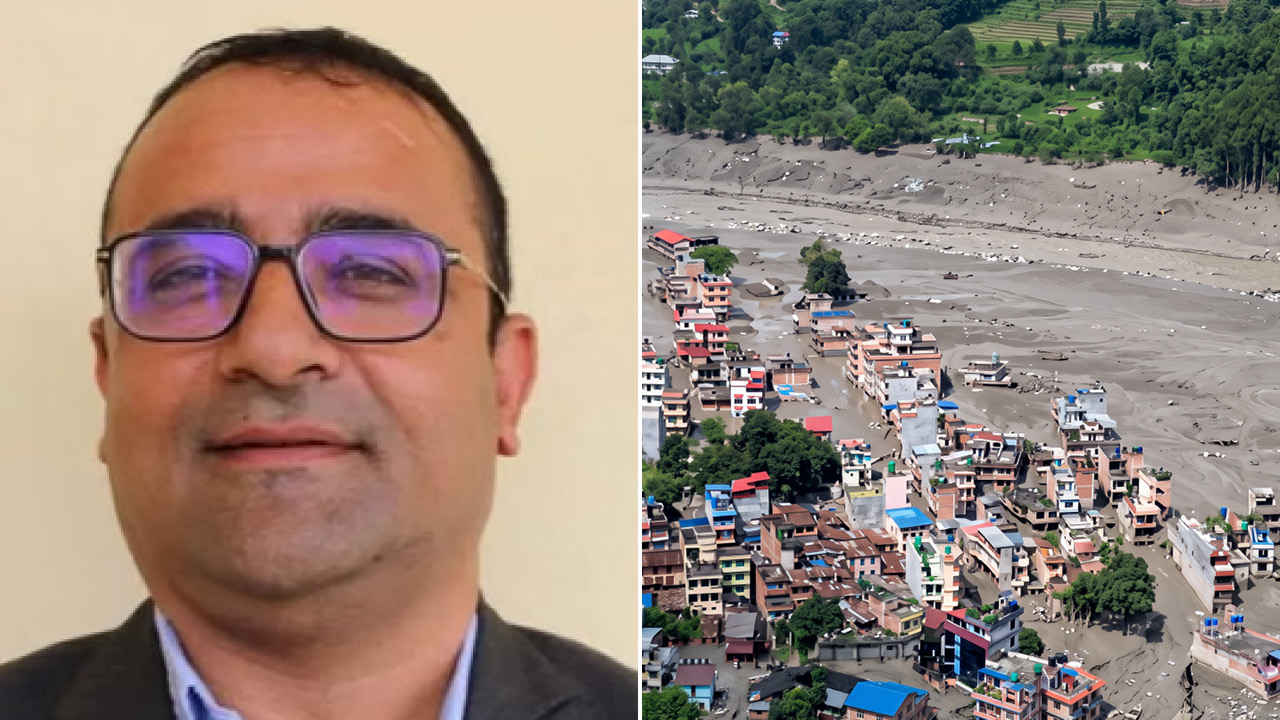
A school headteacher in Nepal rushed 900 children to safety just moments before a torrent of flood water slammed into their town during the catastrophic flash floods that have killed almost 800 people and left thousands missing.
Rajendra Dawadi, headteacher of Tribhuvan Trishuli secondary school in Nuwakot, acted after a series of urgent alerts warned of the scale of the flooding heading towards the area. The school has 1,600 pupils, and Dawadi said he received four warnings from different people within minutes, including one from Betrawati, a town directly upstream.
That was enough for him to stop lessons and move children to higher ground at once. “I decided I shouldn’t delay any more,” he told the BBC. “Even if the flood was not coming, it was just a matter of a single day’s classes.”
As the evacuation unfolded, Dawadi said he watched a hostel building about 100 metres from the river disappear into the rushing flood water. “If we had made the decision 10 minutes later, all of us, including the students and me, would not be able to speak to you today,” he said.
One of the pupils, 16-year-old Yunisha, said the escape came with only seconds to spare. “I, along with my friends, survived by just 10 seconds,” she told reporters. She described children scrambling up a muddy path while water and debris tore through the town. “Within no time, the bazaar was swept away in front of my eyes,” she said. She was reunited with her family three days later.
The floods have also devastated schools elsewhere. Save the Children said at least 69 schools have been destroyed or damaged, affecting nearly 19,000 children.
In Dhading, one of the hardest-hit areas, a group of schoolchildren survived because they had left their classroom for lunch break when the disaster struck. Other children in the area got out after teachers ordered them to evacuate their classrooms just before the water came crashing in.
The mother of one child told the Associated Press that teachers had warned students: “There is a flood and you should leave bags and tiffins. That’s how they managed to survive.”
Nepal said on Sunday that 2,502 people, including 592 foreigners, were out of contact. More than 3,700 people have been rescued so far, and the updated death toll was reported as 781.
According to the US Geological Survey, the disaster began on Wednesday morning in the Nepal-Tibet border region of the Himalayas when a glacial collapse unleashed a wall of water and debris downstream.
Nepal’s foreign minister has urged a global response to the climate crisis, saying Nepali people had disproportionately become “major victims of climate change” despite contributing only a fraction of the world’s fossil fuel emissions.