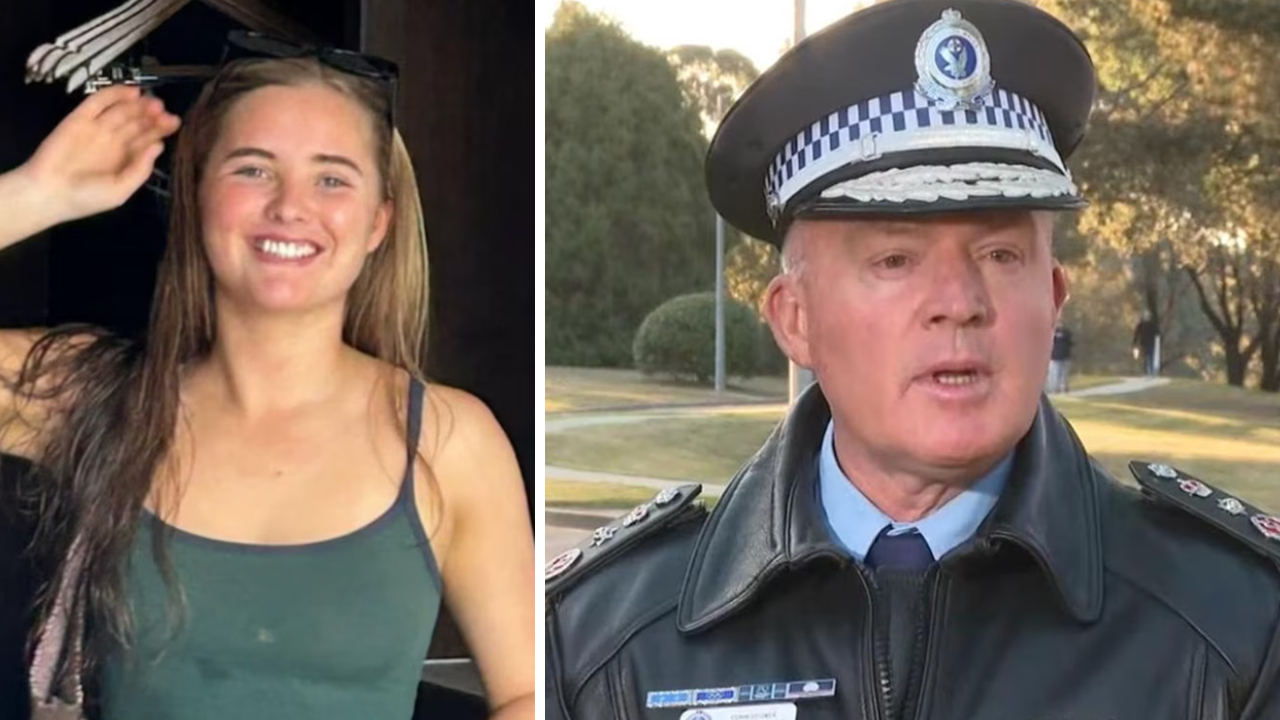
There are moments of grief so intensely private that many believe they should never become television.
That is the criticism now being levelled at Seven News after it broadcast footage showing the family of 18-year-old Lily Hooper celebrating the news they had desperately hoped to hear – that their missing daughter had been found alive.
The problem was, it wasn’t true.
Lily had been found dead in remote bushland in Nattai National Park after an exhaustive eight-day search, but a devastating breakdown in communication meant her family was initially told she had survived.
For around 10 agonising minutes, Lily’s parents believed their daughter was coming home. Seven’s cameras captured those moments.
The footage shows the family embracing and celebrating after receiving the incorrect news, completely unaware that within minutes their relief would be replaced by unimaginable grief.
Seven subsequently chose to broadcast those images as part of its coverage of the tragedy – after it was known Lily had died.
That editorial decision has prompted criticism online, with viewers questioning why such an intensely personal moment needed to be shown at all.
Former journalist David Sharaz was among those to publicly condemn the decision, criticising Seven for broadcasting footage of Lily’s parents celebrating during that brief and tragic window before they learned the truth.
Channel Seven’s decision tonight to broadcast footage of Lily Hooper’s parents celebrating (filmed in the brief, tragic window before they learned the truth) is exactly the kind of intrusion into grief that press standards need to prevent. @AnikaWells @AlboMP @AngusTaylorMP
— David Sharaz (@SharazDavid) August 20, 2026
Others have expressed similar discomfort on social media, questioning the repeated use of footage showing a grieving family at what, in hindsight, was perhaps the cruellest moment of false hope imaginable.
The controversy raises an uncomfortable question about where legitimate public interest ends and intrusion into private grief begins. The communication failure itself is unquestionably a matter of public interest. After almost 1000 people had been involved in the search for Lily, an SES volunteer located her body in dense terrain on Thursday morning. Somewhere between the search team and command post, information about her condition was misunderstood.
Lily’s family was then told she had been found alive.
The incorrect information travelled even further. NSW Premier Chris Minns announced during a parliamentary hearing that Lily had been found alive before returning shortly afterwards to make a devastating correction.
NSW Police Commissioner Mal Lanyon has since apologised “unreservedly” for the communication breakdown and acknowledged the additional trauma it caused Lily’s family.
“The miscommunication obviously was born out of elation that Lily had been found,” Lanyon said. “Tragically, that miscommunication then led to a deflation, and obviously we know now an impact on her family.”
Police and the SES will review their communication procedures in an effort to ensure such a mistake is not repeated.
But the footage broadcast by Seven presents a different issue. The initial mistake occurred amid a vast search operation in rugged terrain, with hundreds of personnel communicating by handheld radios. Seven’s decision about whether to air the family’s reaction came later, when the tragic reality was already known.
Indeed, Seven’s own online report acknowledges that Lily’s family was wrongly told she had survived and includes images of people embracing at the scene following the discovery.
For critics, that distinction matters.
The family’s happiness was real. So was their belief that their daughter had survived. But neither occurred with the knowledge that those precious minutes would later become footage illustrating a national news story about Lily’s death.
Lily disappeared on August 12 after leaving her Oakdale home for a solo hike in Nattai National Park. Her car was discovered near the Bonnum Pic walking trail later that night, sparking an enormous search involving police, SES volunteers, specialist crews and Australian Defence Force personnel.
After eight days of hoping, her family received the news they had been waiting for. Then, within minutes, they learned it had all been a terrible mistake.
For many watching Seven’s coverage, those few fleeting moments of happiness were something Lily’s family should have been allowed to keep for themselves.
Images: NSW Police