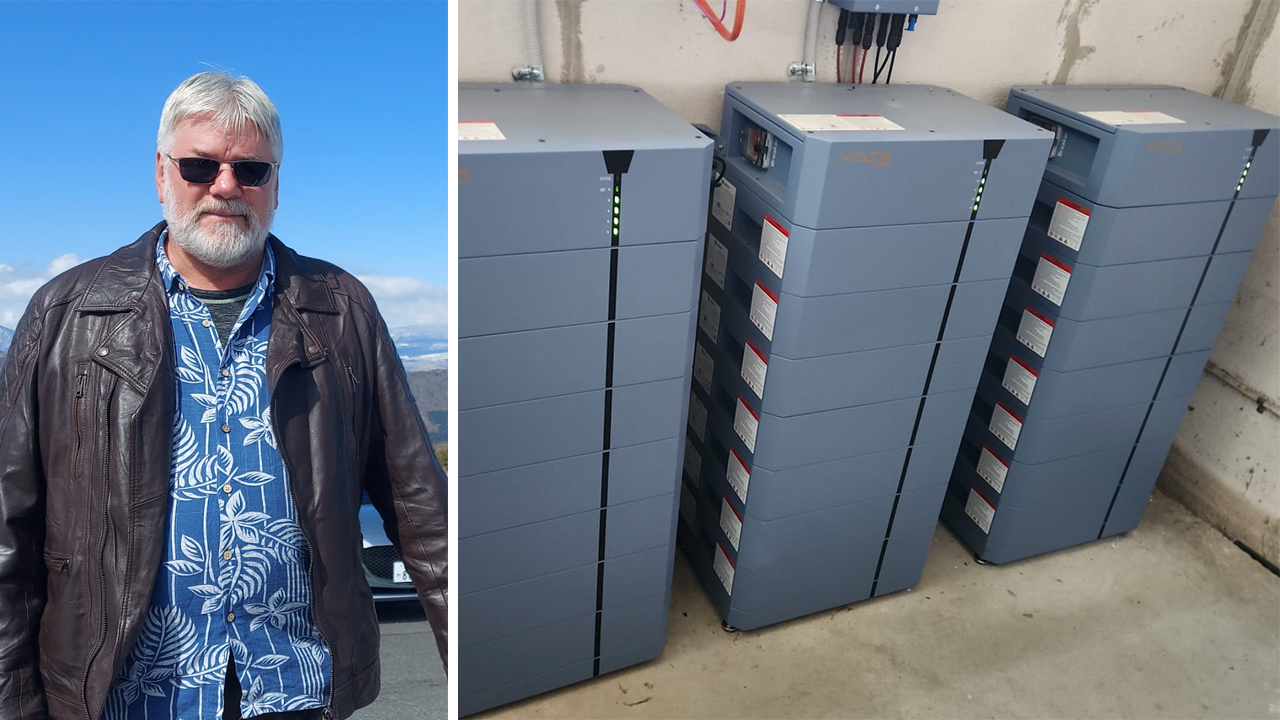
For 70-year-old retiree Rick Carmichael, the thought of spending thousands of dollars on a home battery raised an obvious question: how long would it actually take to get his money back?
Like many older Australians living on a fixed income, Rick was wary of making a major upfront investment, despite already having rooftop solar at his home in Murrumbateman, just outside Canberra.
But after watching his electricity bills climb to around $1,200 and become increasingly difficult to ignore, he decided to crunch the numbers.
He eventually installed a 52kWh home battery system and says the move has reduced his energy bill to zero.
Now Rick is even more comfortable using his reverse-cycle air conditioner to keep the house warm through winter, without worrying about the cost of running it.
“I was concerned about how long it would take to pay itself off,” Rick says. “But once I looked at what I was paying in electricity bills and what I could save, it made sense.”
Rick estimates his battery will have paid for itself in around two years. The savings are now giving him extra money to put towards one of his favourite things – domestic travel.
His experience highlights a growing dilemma for older Australians, many of whom own their homes outright but may be hesitant to invest in technology that could reduce their household expenses.
According to energy solutions provider VoltX Energy, nearly 74 per cent of Australians aged 65 and over own their property outright, yet older homeowners remain among the slowest adopters of home battery technology.
VoltX Energy Chief Operating Officer David Sedighi says misconceptions about the cost and payback period of batteries are contributing to a growing energy affordability divide.
“We know that renewable energy technology like solar and home batteries are drastically driving down power bills but there’s a fear factor holding baby boomers back,” Mr Sedighi says.
“We don’t want to see over 60s excluded from the benefits of solar and battery technology, leaving themselves exposed to increasing electricity bills without any means to reduce them.”
For retirees carefully managing their finances, the upfront cost can understandably be a major consideration.
But Mr Sedighi says many people are still comparing today’s battery prices with the significantly higher costs consumers faced five or ten years ago.
“Many consumers still look at the cost of battery installations with costs from five or ten years ago when the initial purchase price was significantly higher,” he says.
He claims a 28kWh battery setup can now be installed for under $4,000, potentially allowing households to reduce their reliance on the electricity grid and recoup the investment in around two years, depending on individual circumstances and energy use.
For some households, joining a virtual power plant can also provide an opportunity to earn money by feeding stored electricity back into the grid.
For Rick, however, the biggest benefit is simpler: knowing his electricity costs are no longer eating into his retirement budget.
Instead of worrying about whether turning on the heater will send his next bill soaring, he can use his home’s energy more freely.
And with the money he is saving, he is looking forward to seeing more of Australia.
Mr Sedighi says rising electricity costs could make the issue even more important for retirees.
“There is a real risk that the Australians who would benefit most are the ones least likely to access the technology to help deliver those savings,” he says.
For homeowners like Rick, the lesson is to look beyond the upfront price tag and consider the potential long-term savings while doing the sums carefully based on their own home, energy usage and circumstances.
Sometimes, the biggest cost-saving decision may be the one that initially feels like the biggest expense.
Images: Supplied